Missed-Call Text-Back: The Playbook That Pays for Itself
The full missed-call text-back playbook for service businesses: how it works, what to send, how to stay compliant, and how to wire it without losing leads.
Updated 2026-08-18
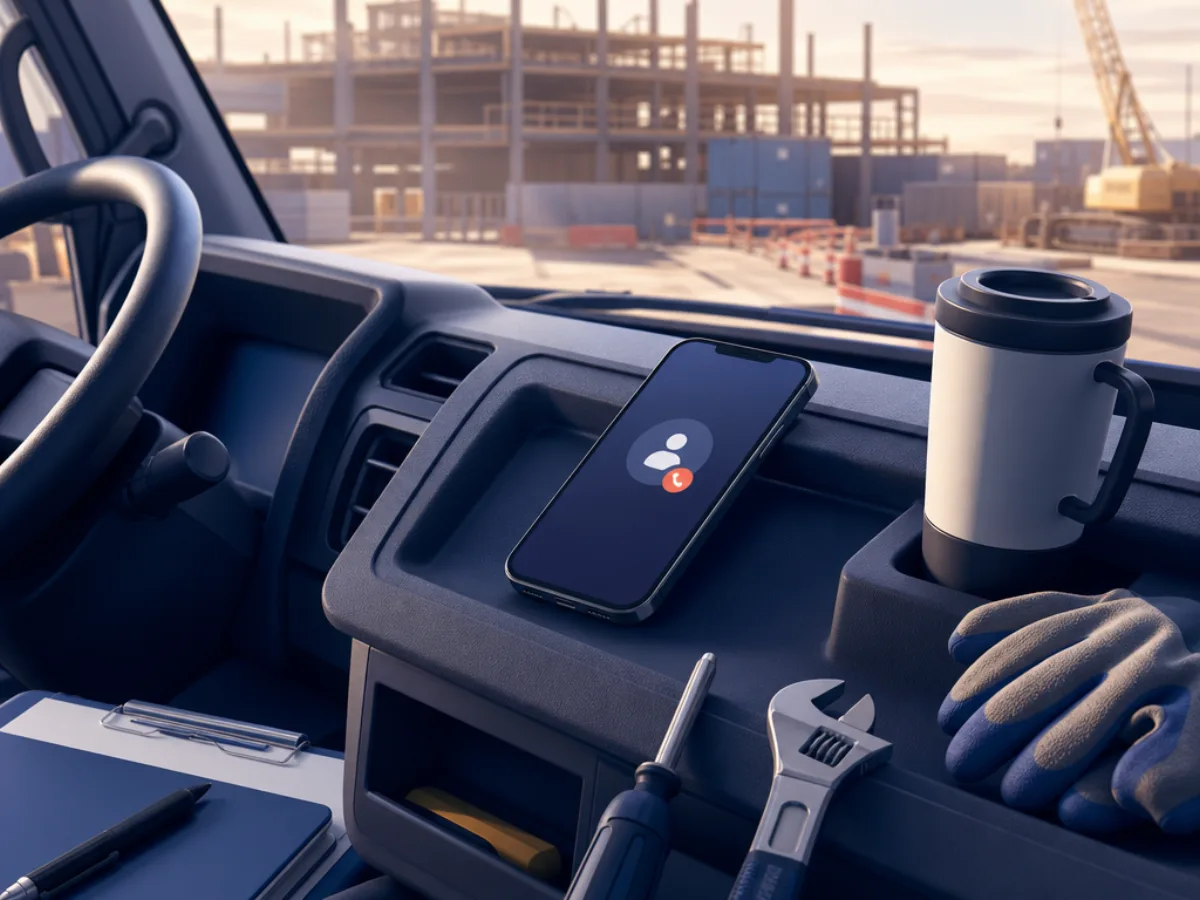
Missed-call text-back is the cheapest thing I sell and the one that most reliably makes a business money. The mechanic is stupid simple: when a call to your business goes unanswered, an automated SMS goes out to that caller within seconds, and a conversation starts. That is it. No AI is strictly required, though adding it makes the follow-up much better.
I build these for contractors, lawn crews, junk removal, restoration, moving companies, dog groomers, remodelers. The pattern is always the same. These businesses miss a lot of calls because the owner is on a roof or under a sink, and every missed call is a person who is about to dial the next result on the page. Text-back grabs them before they do.
Why it works better than anything else you could bolt on
Three reasons, and they compound.
The window is minutes, not hours. Someone with a burst pipe calls three companies. Whoever responds first usually wins, and the drop-off after about five minutes is brutal. An automated text lands in under 10 seconds. No human beats that.
Texting removes the second phone tag. The caller could not reach you. Calling them back means they may not reach you either. A text sits in their pocket until they can answer it, and the reply rate is far higher than callbacks.
It requires zero behavior change. The owner does not have to learn a system, install anything, or answer differently. Calls he already misses become texts he can answer between jobs. That is why it survives past month two, unlike most tooling sold to contractors.
The core flow
At its simplest, five steps:
- Call arrives at the business number.
- Call goes unanswered (no answer, busy, or after hours).
- The system detects the missed call and captures the caller's number.
- An SMS goes out from a number the caller can reply to.
- Replies land somewhere a human actually looks, or an AI handles the first few turns.
Step 5 is where most implementations fail. If the reply goes to a system nobody monitors, you have built a machine that annoys prospects.
Wiring it: three architectures
A. Carrier or phone-system trigger
If your phone system emits a missed-call event, hook it directly. Cleanest option and lowest latency. Works well when the business is already on a hosted system.
B. Forward-to-a-tracking-number
Provision a number on a telephony provider, forward your business line to it on no-answer, and let the provider's webhook fire the text. This is my default because it works regardless of what phone system the client has and it is reversible in one setting. The same forwarding work is covered in phone forwarding for AI agents.
One caution: whatever number sends the text should be the number the customer can call back and reach a human or an agent. A text from a number that rings nowhere is worse than no text.
C. Full AI answer plus text fallback
The AI receptionist picks up, and the text-back covers only the cases where the caller hangs up before the agent engages, or where the agent promises a follow-up. This is the most complete setup and the most work.
Start with B. Graduate to C once the business is comfortable.
What the first text should say
I have tested a lot of variants. The pattern that works:
Hi, this is [Business]. Sorry we missed your call. What can we help you with? Reply here and we'll get right back to you.
Rules I hold to:
- Identify the business in the first four words. An unidentified text from an unknown number reads as spam and gets ignored or reported.
- Ask exactly one open question. "What can we help you with?" outperforms a menu, and it outperforms "Can we call you back?" because yes/no answers give you nothing to work with.
- No links in the first message. Links in cold SMS drag carrier filtering down on you. Send links on the second turn, after they reply.
- Include opt-out language on the first message of a conversation. Short, plain, at the end.
- Never send more than one message per missed call. No "just checking in" chains. That is how a number gets flagged and how a business gets a complaint.
Keep it under 160 characters where you can. Longer messages split into segments, cost more, and sometimes arrive out of order.
Where AI actually earns its place
The text goes out fine without AI. What AI adds is the middle of the conversation, and that is worth real money for a service business.
Qualification. The customer replies "my water heater is leaking." An agent can ask the three questions that determine whether this is a job worth driving to: address or ZIP, is it currently leaking, and when can we come. It hands the owner a qualified lead rather than a fragment. See AI lead qualification.
Booking. With calendar access, the agent can offer two real slots and confirm one. For lawn care, junk removal, and grooming, this closes jobs entirely inside the text thread with no human touch.
Answering the obvious. "Do you service my area?" "How much for a single-item pickup?" These are the majority of replies, and they are all in the knowledge base already.
Triage and escalation. Emergencies get flagged and pushed to the owner immediately. Everything else queues.
What I do not let the AI do: quote a firm price on anything with variables, promise an arrival time, or keep the conversation going once the customer has clearly disengaged. Two unanswered turns and it stops.
Compliance, which is not optional
This is the part that gets skipped and it is the part that can cost more than the system ever earned.
The inbound call is your basis for the first reply. Someone who calls your business and then receives a prompt reply about that call is a fundamentally different situation from cold outreach. Do not let that reasoning creep. It covers responding to their inquiry. It does not cover adding them to a promo list.
Never message anyone who has not contacted you. I built an SMS assistant inside a sports-facility company's CRM with a hard consent gate: the system cannot send to a contact without a recorded opt-in, full stop, no admin override, no "just this once." Build the gate into the code, not into the policy document, because policies get overridden at 4:59pm on a Friday and code does not.
Honor STOP instantly and permanently. Your platform probably handles this at the carrier level. Verify it, and make sure your own database records it too, so a later import does not resurrect an opted-out number.
Register your traffic. US A2P messaging requires brand and campaign registration. Unregistered traffic gets filtered, which means your texts silently do not arrive and you will not know. Do this before launch, not after the client asks why nobody replies.
Keep records. Timestamped call log, timestamped send, timestamped opt-out. Full detail in TCPA compliance for AI SMS.
Testing it properly
Do these before you turn it on for a client:
- Call from your own cell and let it ring out. Confirm the text arrives, from the right number, with the right business name, within 15 seconds.
- Reply and confirm the reply reaches a human or the agent. Both directions. This is the leg that breaks most often.
- Test after-hours behavior. Different message, or same? Decide deliberately.
- Test the hangup-at-two-seconds case. Some systems do not consider that a missed call. Some do and you will text every wrong number.
- Test STOP. Send it, confirm it stops, confirm a subsequent missed call does not re-trigger.
- Test the owner's notification. He should get something too, not just the customer.
And verify with real records, not just the builder. I hold to a rule: verify the wiring, not the logic. Tests that pass inside a tool have told me a system worked while the live integration was quietly dropping leads. Replay real production traffic through the deployed path and confirm the output landed where a person will see it.
Filtering out the noise
Two settings save a lot of grief:
- Suppress repeat sends. If the same number calls four times in ten minutes, send once.
- Suppress known non-customers. Spam callers, robocalls, and your own team's numbers. A simple blocklist plus a rule against texting numbers that hung up in under three seconds cuts most of it.
What to measure
Keep it to four numbers:
| Metric | What it tells you |
|---|---|
| Missed calls detected | Whether the trigger is actually firing |
| Texts delivered | Whether carrier filtering is eating you |
| Reply rate | Whether the message copy works |
| Jobs booked from replies | The only number that matters to the owner |
If reply rate is low, the message is wrong or the sending number looks untrustworthy. If delivery is low, it is registration or filtering. If missed calls detected is zero, it is the forwarding, and it is always the forwarding.
When it is not the right tool
If your business does almost all of its work by appointment and rarely misses calls, this does nothing. If your customers are older and do not text, it does very little. And if nobody is going to read the replies, do not build it. That last one is the most common reason it fails, and I go through more of those cases in when not to use a chatbot.
FAQ
How fast should the text go out?
Under 15 seconds. Faster is better and there is no downside to instant. The whole value is arriving while the person still has your business in mind and before they dial the next company.
Can I use my existing business number to send the texts?
Sometimes. Landlines can often be text-enabled, and hosted business numbers usually can. If not, use a dedicated number and make sure calls to it route somewhere real. Do not send from a number that cannot receive.
Does the AI have to handle the reply, or can it just notify me?
Notification alone captures most of the value, and it is the right first version. Add AI once the owner is drowning in replies or wants after-hours booking. Sequence it that way and adoption is much better.
What about voicemail? Does this replace it?
It complements it. Many callers will not leave voicemail but will answer a text. I usually keep voicemail in place at first and let the data show which one people actually use, then trim.
Is one message per missed call really enough?
For the first version, yes. A single well-timed message with a real question gets strong reply rates. Follow-up sequences increase complaints and carrier filtering risk far faster than they increase bookings, and for a small local business, one spam complaint is not worth the extra job.